For:

Desktop Experience
Case Study 01 — Procore
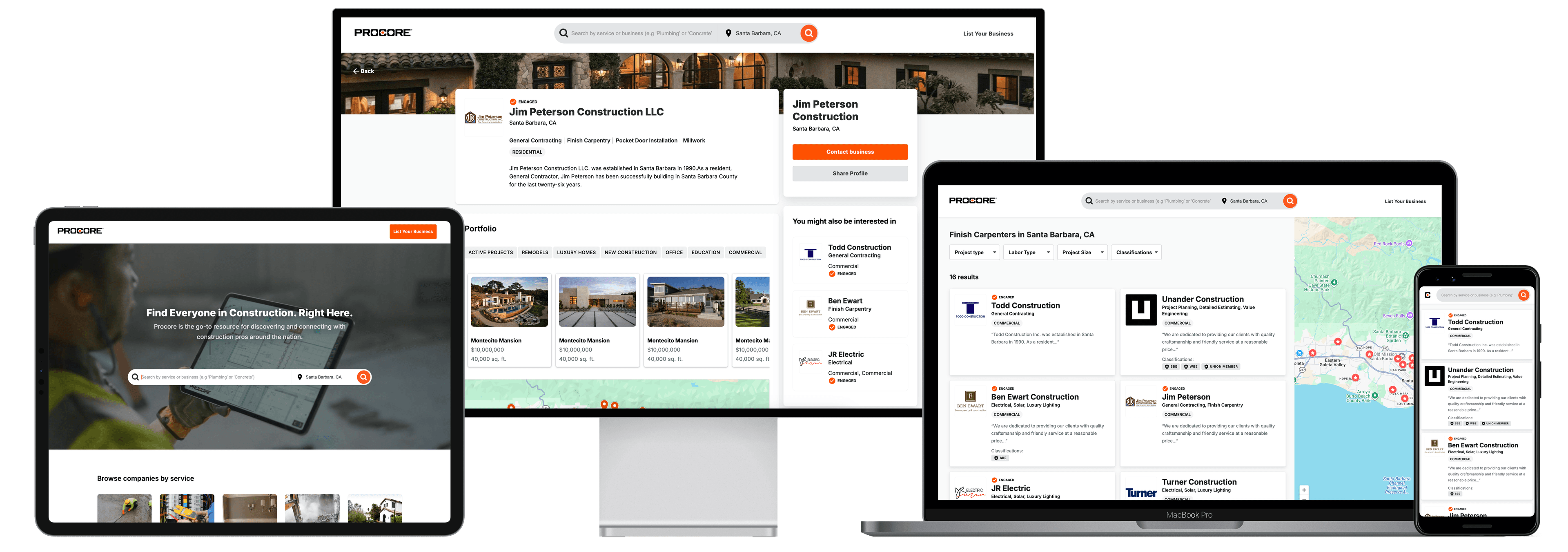
Procore's mission is to “Connect Everyone in Construction on a Global Platform” — but they had no product that actually let the industry connect with each other.
General Contractors needed a reliable way to find and vet specialty contractors. Specialty contractors needed a way to market themselves and get found.
Procore already had one of the largest datasets of construction companies in the US but hadn't figured out a way to use it. And there was a clear SEO opportunity sitting uncaptured: a public-facing marketplace where every contractor search on Google led back to Procore.
The opportunity was pretty clear internally but for whatever reason the right team or time had never been in place to deliver.
I was placed on the initiative in late 2020, together with a PM and a lead engineer, to help drive the idea to production.
My 2020 Design Process
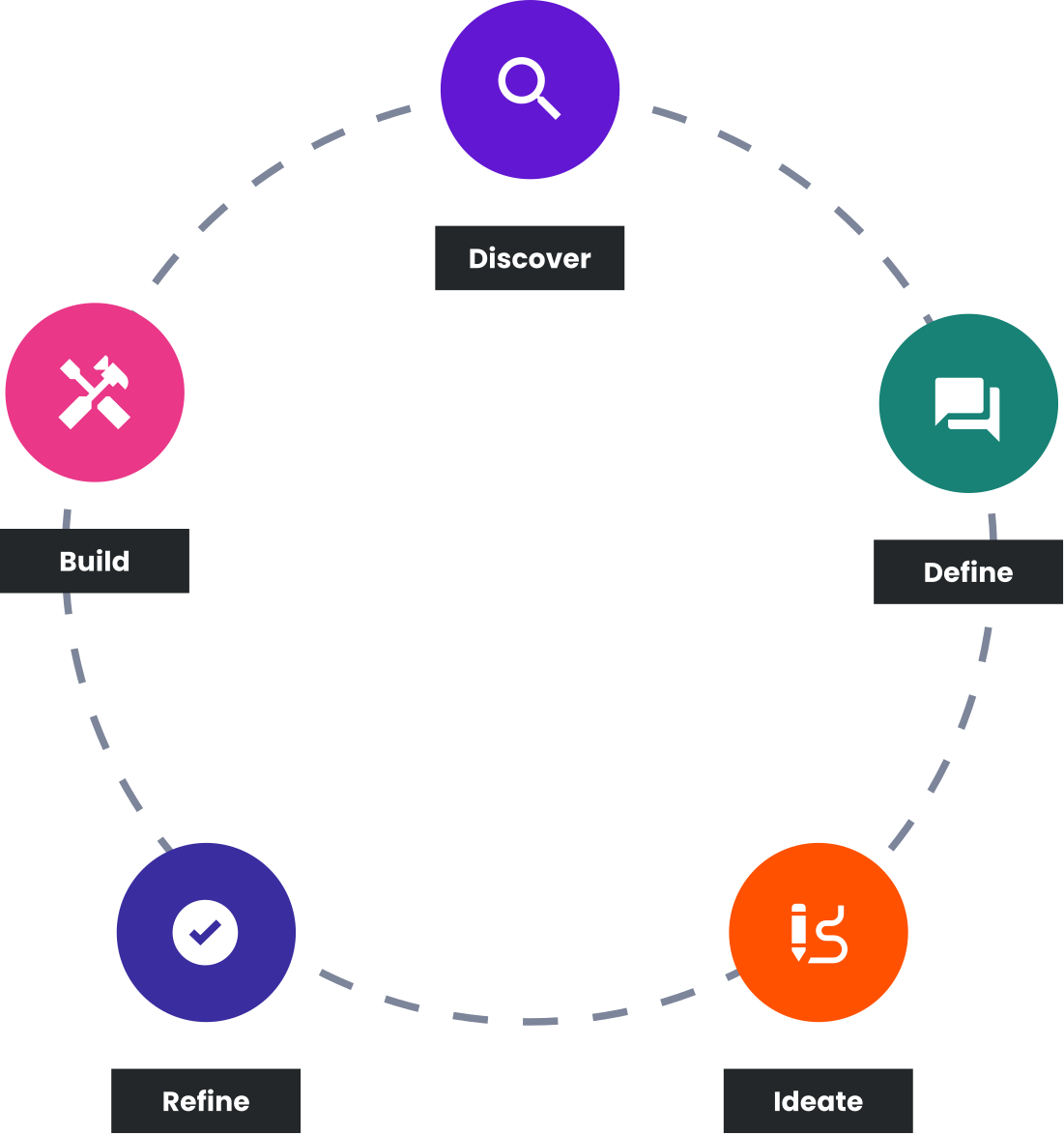
For the Procore Construction Network, I followed a very traditional design process. Starting with discover, then low-fidelity flows and concepts and moving towards more robust and refined prototypes.
Below, I'll walk you through that process and highlight how the steps impacted the final outcome and success of the Procore Construction Network.
01 - Document Everything
At the start of the project, I was aware that there had been a few other attempts before my time to get a construction network off the ground. It was my intent to keep momentum up as the project was kicked off. One of my goals early on was to simultaneously drive alignment and excitement internally within the organization to keep the project funded and moving forward.
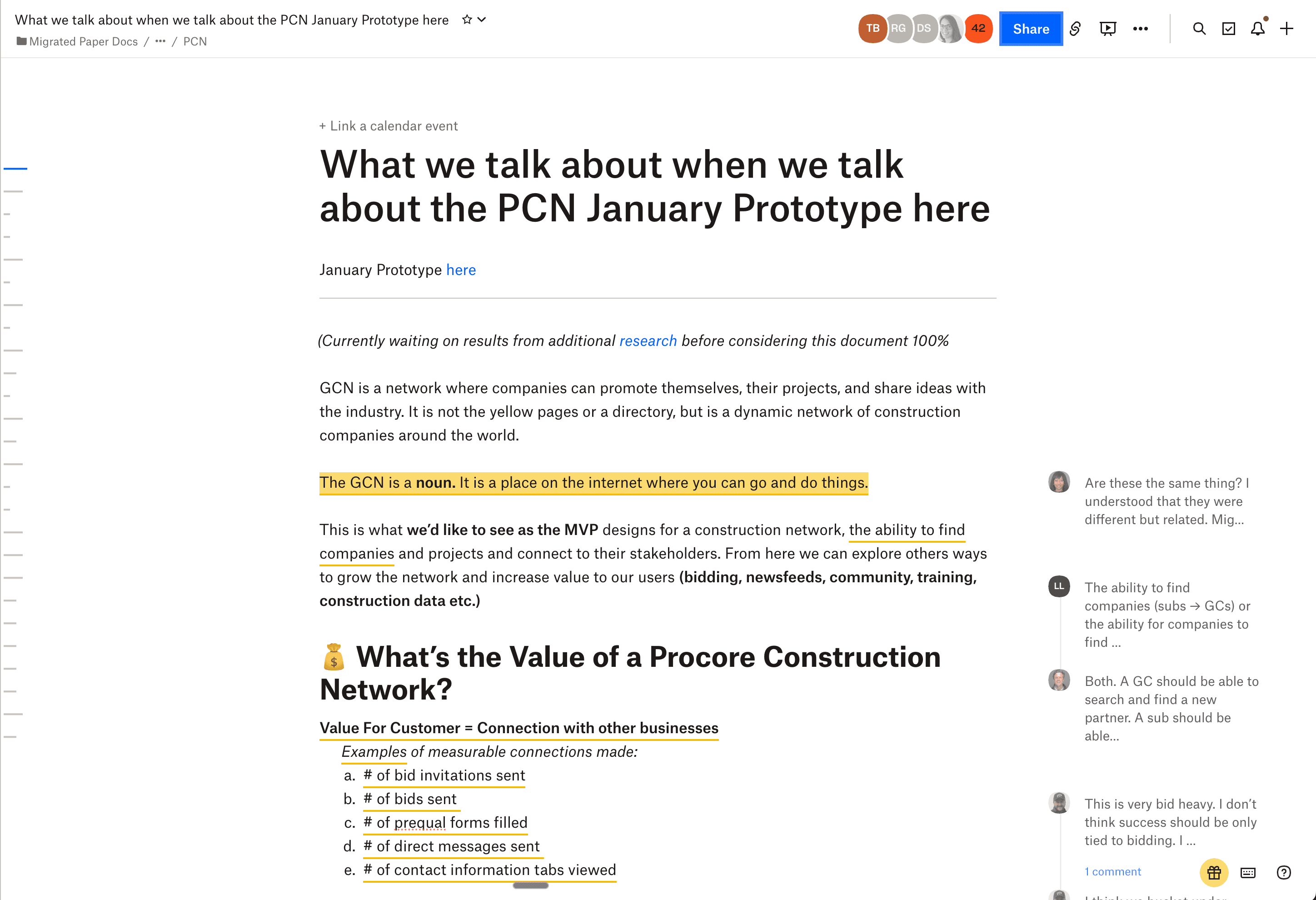
I did this through rigorous documentation and making promo videos of what the construction network could be one day. As cheesy and cringe as some of these videos feel now, they played an important role in keeping the organization speaking the same language and moving in the same direction.
A few examples: Internal Strategy Document ·
02 - Discovery "What Works"
The Procore Construction Network was to be a marketplace, and I had never designed one before. So my very first step in discovery was dissecting other marketplaces — I didn't want to reinvent the wheel.
I did a deep dive into the most successful marketplaces on the web, studying what was setting the standard for best practice. This was both to educate myself and to get my PM partner and engineering lead looking at the same strong patterns early in the process.
My goal was to identify the most important shared elements across these marketplaces — both for the searcher and seller experience, and for SEO.
03 - Discovery "The real world"
Still in the discovery phase of the design process, we set out to better understand the real-world experience of our customers.
Ultimately we need to understand two fundamental workflows:
1. How do companies find other companies to work with?
2. How do companies position themselves to increase their chance of being chosen to bid on future projects?
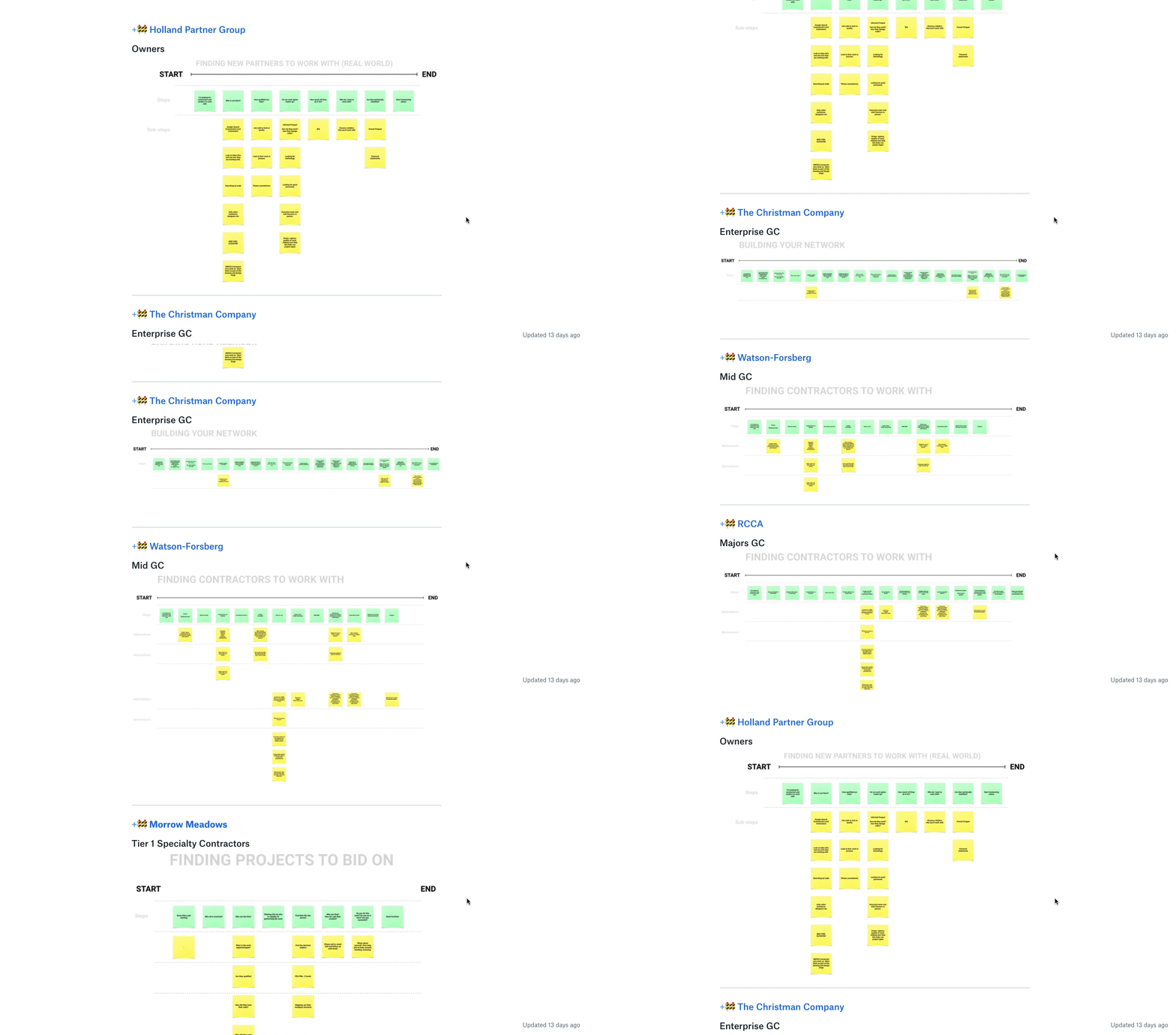
Through a series of discovery calls, I had our customers walk us through their journey, as it existed at that moment.
All of these calls were recorded and captured in visuals.
Unshared research is often wasted research.
04 - Define
Much of the complexity that came with the Network was figuring out how it lived between a signed-in and signed-out experience. How might users seamlessly move between the Procore that they worked in daily, and a network where they presented themselves publicly?
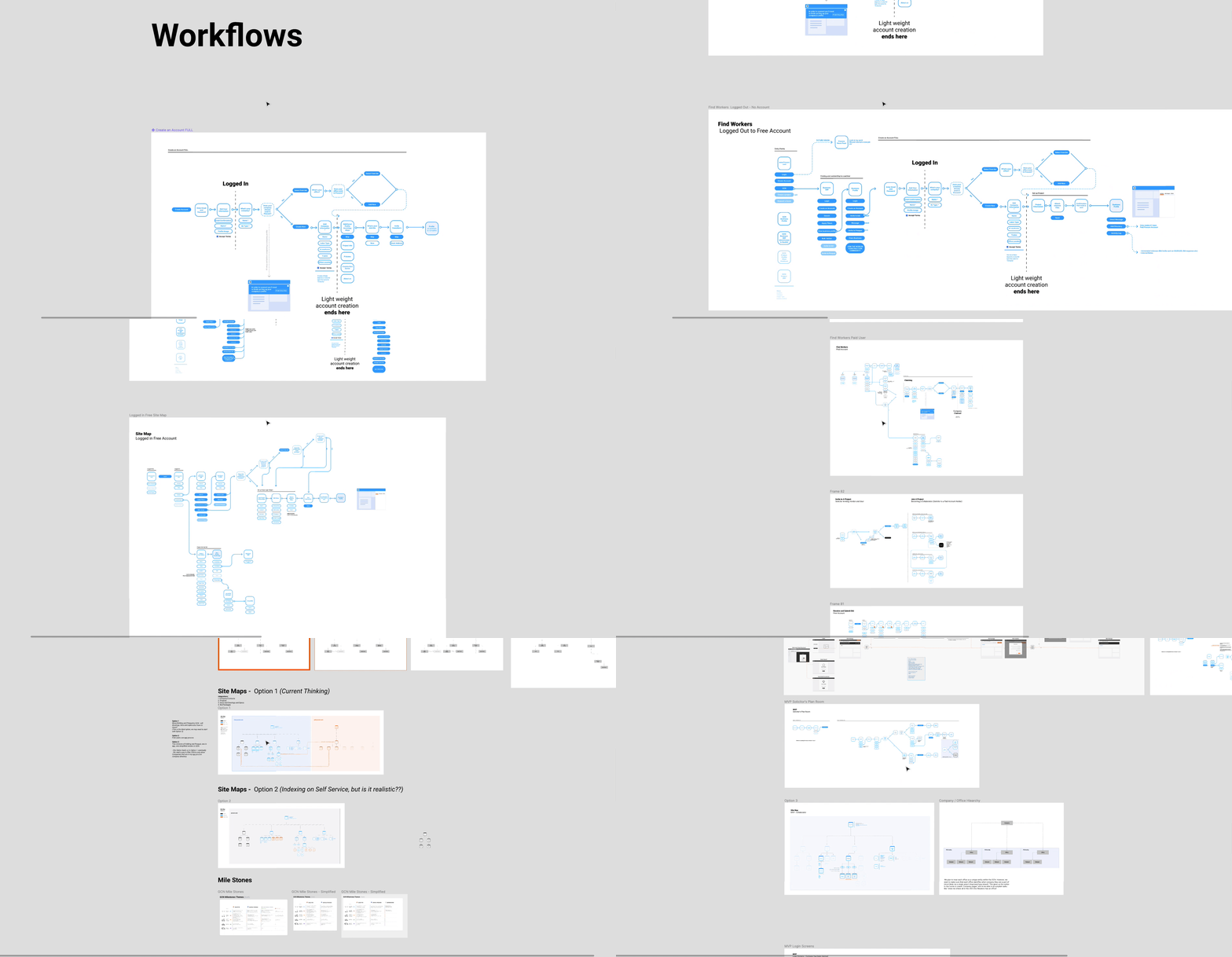
Together with our PM and lead engineer, we worked at a very high level to map the key journey maps and flows in the Construction Network. The questions in front of us:
How will users flow through this experience?
How will they accomplish all that they need to accomplish?
Those high-level flows were put together with members of Product, UX, and Engineering in the room. So much of the experience would depend on technical limitations, and it was important that we consider those from the start.
05 - Ideate
With a solid understanding of our users' needs, a grasp on marketplace best practices, and an awareness of the constraints we were faced with technically, I started to design screens. Before moving to high fidelity, I designed everything in grayscale. Introducing color and polish too early risks shifting the conversation away from what actually matters — whether the flows and features are right. These wireframes were shared internally for alignment and iterated on based on feedback.
The PCN sat between Procore's marketing site and the core app, which meant the design system did too. There was no clear system to inherit, and I knew that debate could become a distraction. Staying in grayscale kept everyone focused on the right problems until we were ready to have the visual design conversation.
For search results I leaned toward tight rows over big cards so GCs could scan and compare fast.
06 - Refine
This is where I deviated from the classic design process — and where my Activator instinct kicked in.
By the end of 2020, we had done the research, defined the vision, and were ready to build. But our team was just three people: a PM, a lead developer, and me. We didn't have engineers yet. The project had momentum on paper but nothing to show for it.
Rather than wait, I spent the Christmas break building a working prototype in HTML and CSS — half seriously threatening to learn React and ship the whole thing myself. It wasn't precious. It was just enough to make the vision real and get the project moving.
What I didn't anticipate was how much that prototype would do. It became one of the most important artifacts in the entire project — a reference point that engineering built directly from when the team finally came together. But more immediately, I believe it helped us get engineers assigned sooner. Leadership could suddenly see the product clearly in a way they hadn't before. The prototype didn't just refine the MVP. It helped make the case that this was worth resourcing.
07 - Refine
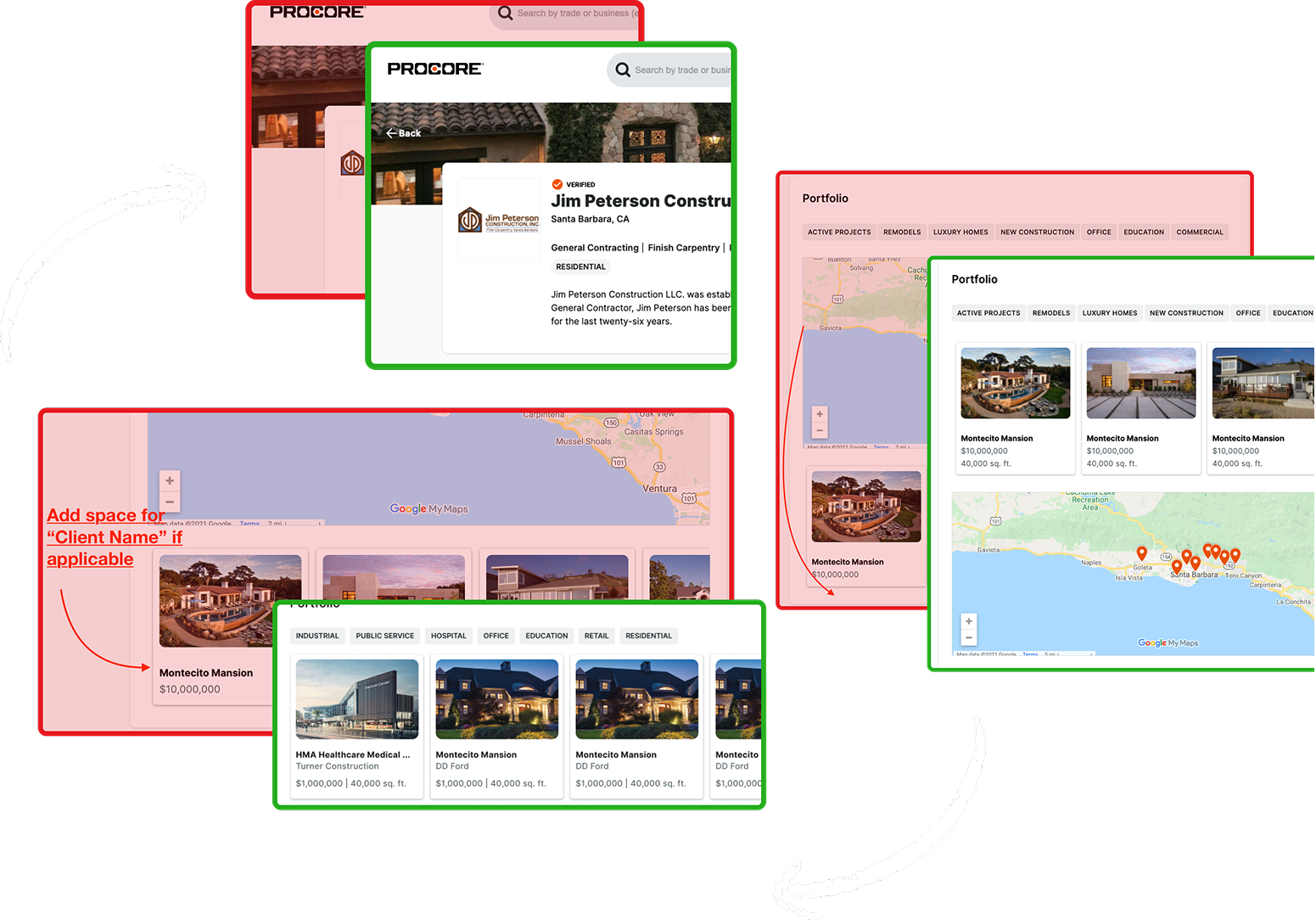
A massive benefit to having a working prototype before development began was the chance to start testing and iterating immediately.
Together with Procore's research team, we started getting the prototype in front of real customers using a RITE methodology — Rapid Iterative Testing and Evaluation. The idea is pretty simple: test with a small group, find the biggest issues, fix them, and test again.
Because we were working in code, I could take the feedback we got on a Tuesday and have updates live by Wednesday. Each round made us more confident in what we were building, and by the time the engineering team came together, we weren't starting from zero. We hit the ground running.
08 - Build
Once we had a real build in motion, I made sure we were instrumenting the right events — what people clicked, where they lingered, bounce patterns, and the other signals we needed to understand whether the experience was working.
I stayed close to the developers shipping the production version: clearing blockers, updating flows and UI details as constraints surfaced, and keeping the build aligned with what we had already learned in research and iteration.
I planned to help with CSS polish; in practice I owned the responsive CSS for the first iteration so the site held up on mobile. A lot of that code is still in production today.
09 - Business Impact
2021 — Launch
Prototype secures buy-in. Dedicated team funded. Platform built.
2022 — Traction
Free accounts, Bid Board, and PCN+Bidding integration all ship within 14 months of launch.
2023 — Scale
98%+ of paying customers discoverable via PCN. First bid awarded to a company found through the network.
2024 — Infrastructure
Expanded to Canada. Gilbane (ENR #10) commits to sunsetting Building Connected and fully adopting Procore Preconstruction.
"Because we used the Procore Construction Network, Peridot Mechanical is projected to triple our annual revenue."
John Watson — Peridot Mechanical
"Companies in the PCN are aligned to our requirements. We no longer have to make countless phone calls to find the right firms, which saves us a significant amount of time."
Sean Leach — Project Manager, BBL Construction Services
For:
Desktop Experience